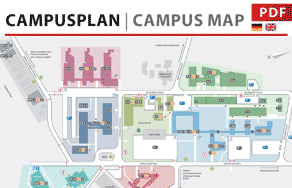


hiermit laden wir zum 110. CoSA-Seminar am Montag dem 23 März 2026 um 11:45 Uhr ein. Das CoSA-Seminar findet in Präsenz im Raum G.3-2.16 statt.
Wir haben folgende Vorträge geplant:
- Peter Bartmann: Machine Learning-Based Transceivers: Two-Stage Training for Digital Modulation
Recent advances in machine learning have inspired the redesign of fundamental building blocks of wireless communication systems. In this paper, we investigate an end-to-end learning framework for digital modulation using neural networks. We introduce a machine learning (ML)-based transceiver that we name in short "smart transceiver". For this, we propose a two-stage training process: (i) supervised demodulation training with pilot symbols transmitted by a conventional system, and (ii) modulation training via communication between a learned demodulator and a neural modulator, under additive white Gaussian noise (AWGN) conditions. Convolutional neural networks (CNNs) are employed to learn robust symbol constellations and decoding strategies without relying on explicit channel models. We systematically analyze the impact of training parameters, including the number of training bits, on the learning outcome. Performance is evaluated in terms of bit error rate (BER) and compared against conventional transceivers. Our results demonstrate that our approach achieves competitive performance with a loss of less than 0.5 dB while adapting to channel conditions, highlighting the potential of ML for future communication systems beyond manually engineered constellations. - Sebastian Hauschild: AI-Based Classification of the Meat Freshness using Cantilever Sensor Data
A novel approach for determining the freshness of fish and meat involves the use of cantilever sensors, which analyse the concentration of cadaverine on the surface. The cantilever sensor is excited with a voltage sweep around its resonance frequency and the frequency shift due to deposits on the sensor is measured. In this work, we present a draft of a distributed system and compare AI-based analysis of the stored cantilever sensor data with raw sweep data without preprocessing. We defined a meat quality index (mqi) range for the measurements, which depends on the frequency shift between a reference and cadaverine measurement. We investigated, that the best practice to predict the mqi value is to use classical machine learning models such as Random Forest, LightGBM, XGBoost where Random Forest performs best with an val. / test accuracy of up to 72.01 % / 71.67 %, precision of 72.37 % / 72.53 %, recall of 72.01 % / 71.67 % and F1-Score of 72.06 % / 71.72 %. - Sebastian Hauschild: Portable IoT Platform for Experimental Cadaverine Measurements
The use of cadaverine-selective cantilever sensors on IoT platforms to predict the shelf life of meat represents a novel approach in food processing. These sensors generate large volumes of measurement data directly at the source, requiring software-based analysis and machine learning. Assessing meat freshness in industrial environments is challenging because network stability and availability cannot always be guaranteed indoors. This may interrupt data evaluation and hinder real-time analysis as well as data uploads. To address these issues, this work proposes a portable IoT measurement platform designed to receive experimental sensor data. The platform integrates multiple wireless technologies and middleware components to enable local data acquisition, processing, storage and visualization of sensor data.
Die Vorträge dauern ca. 15 Minuten mit anschließend 5 Minuten Diskussion. Wir freuen uns auf eine rege und aktive Teilnahme.