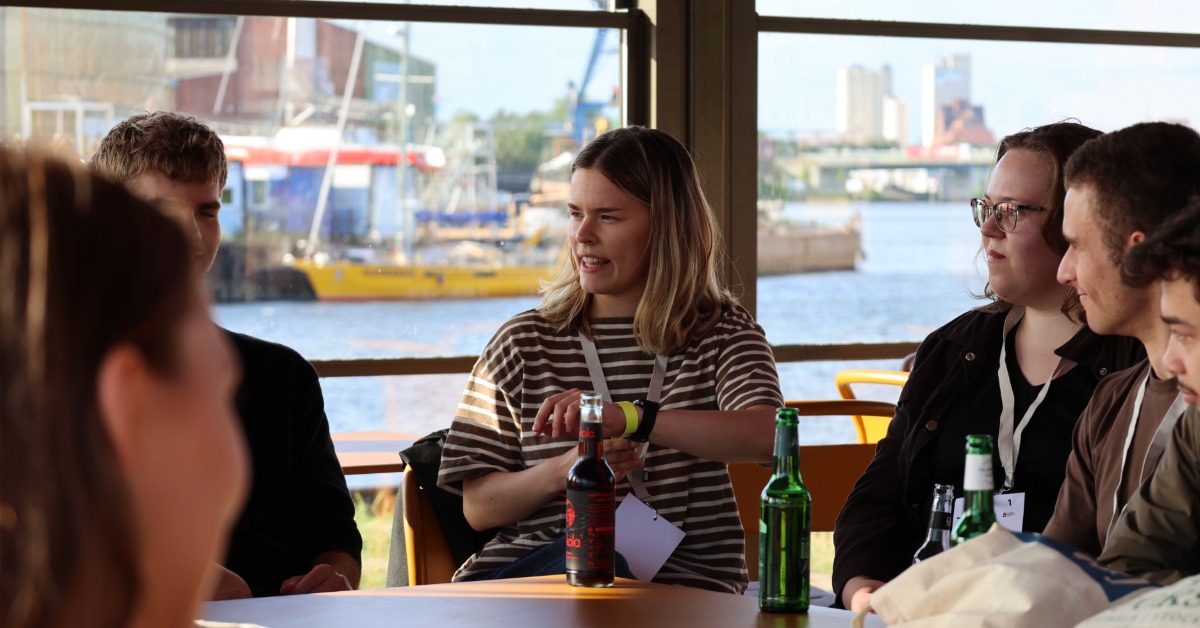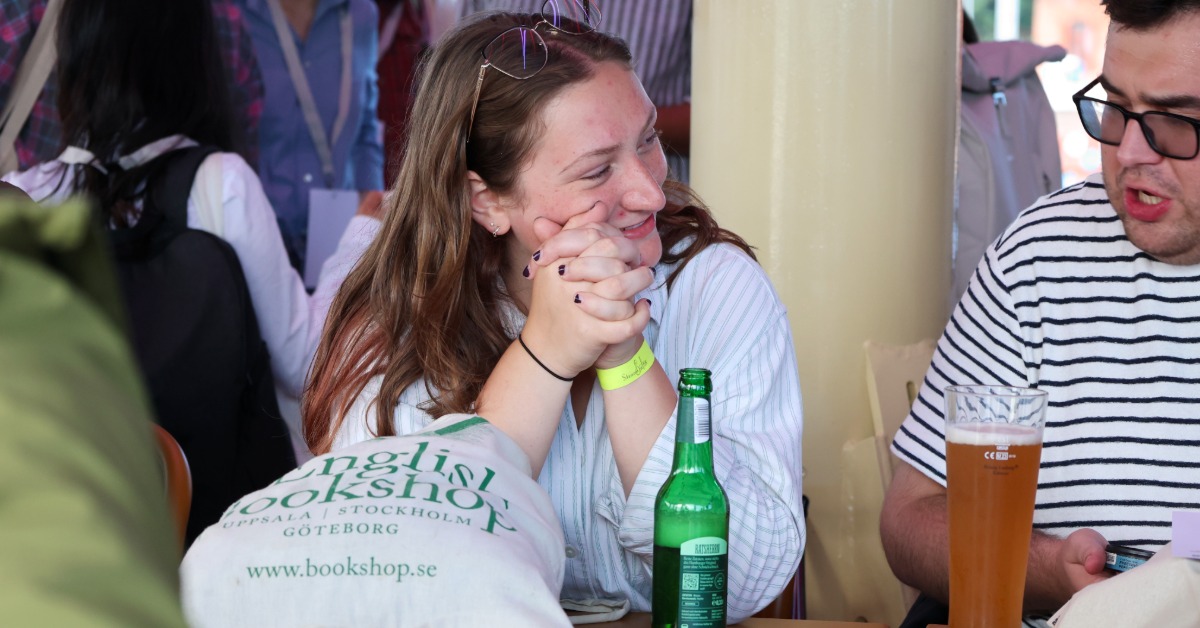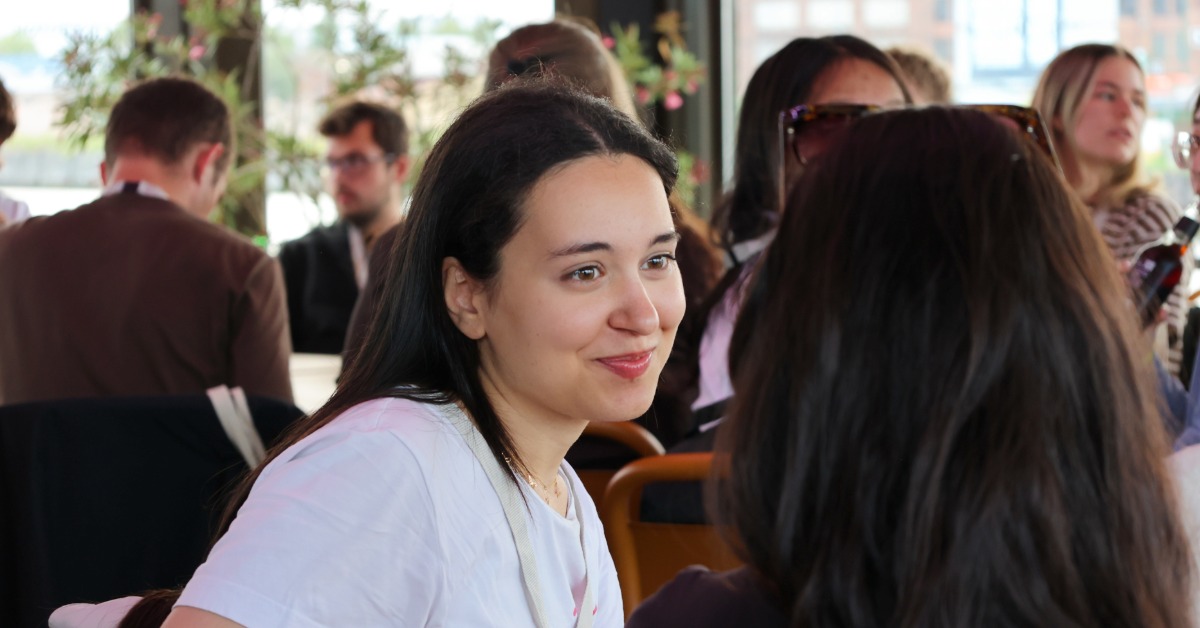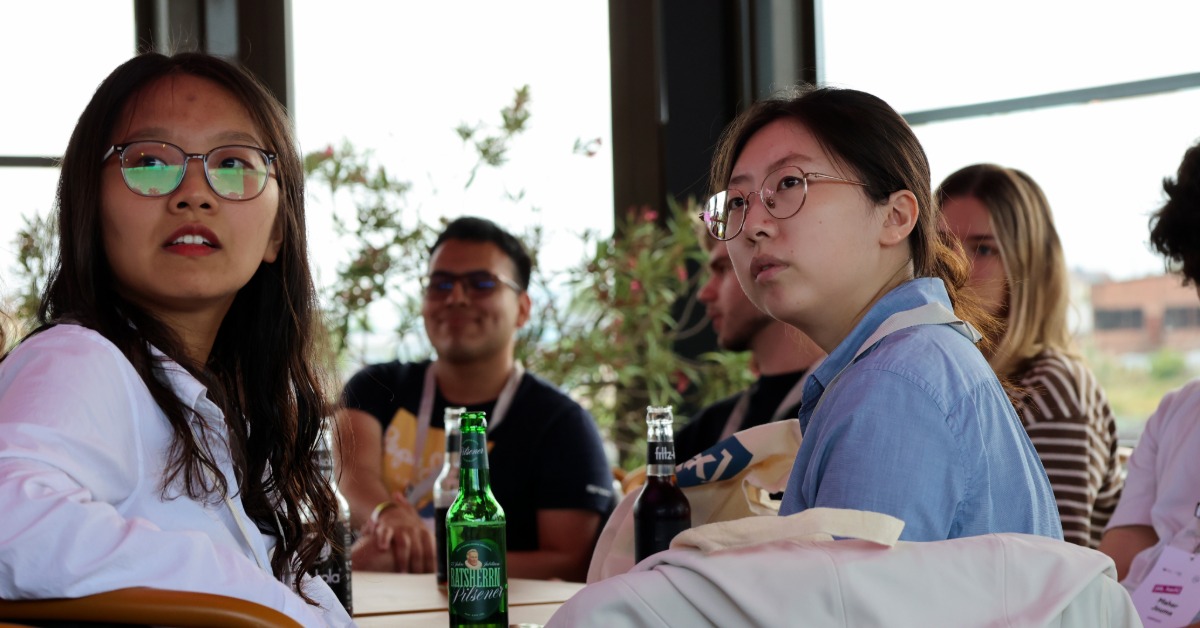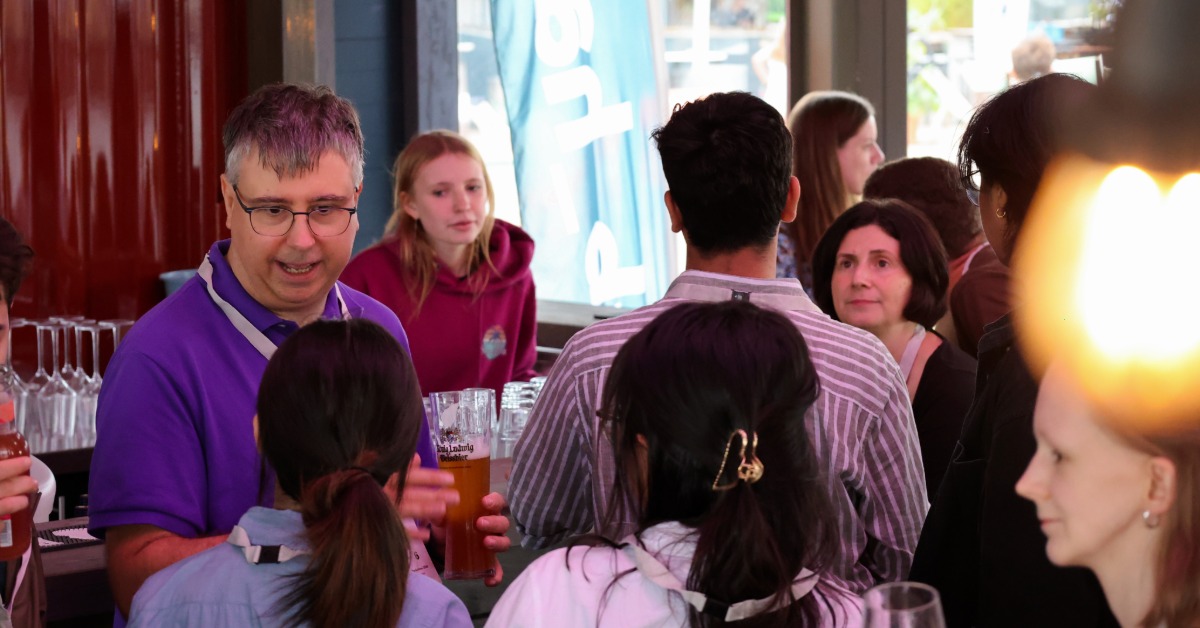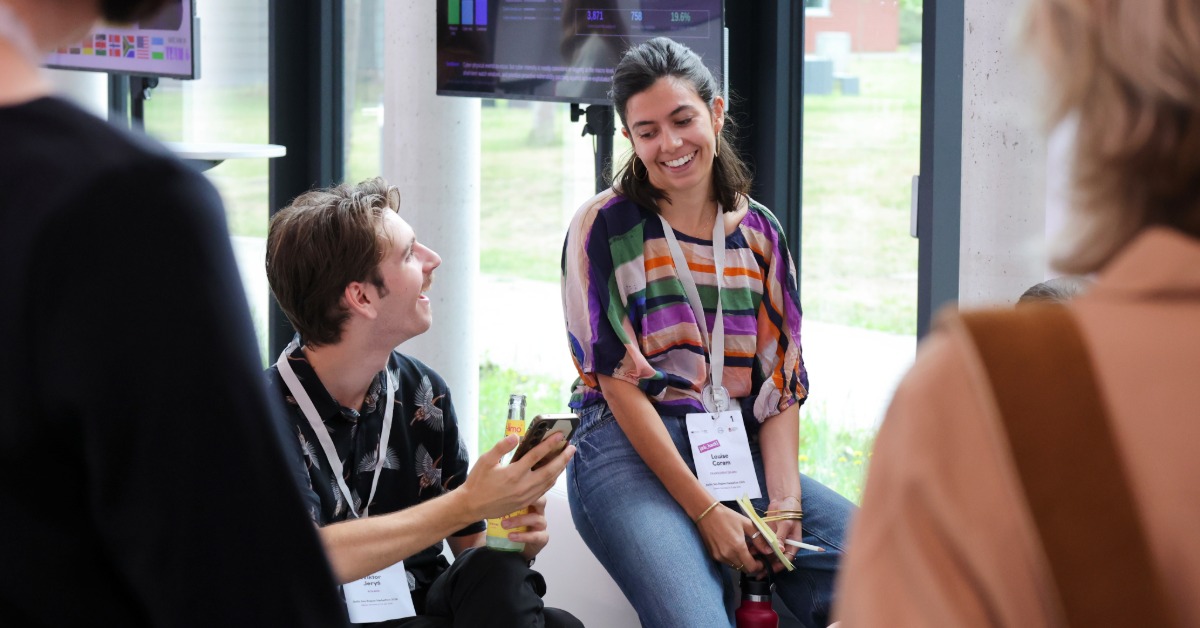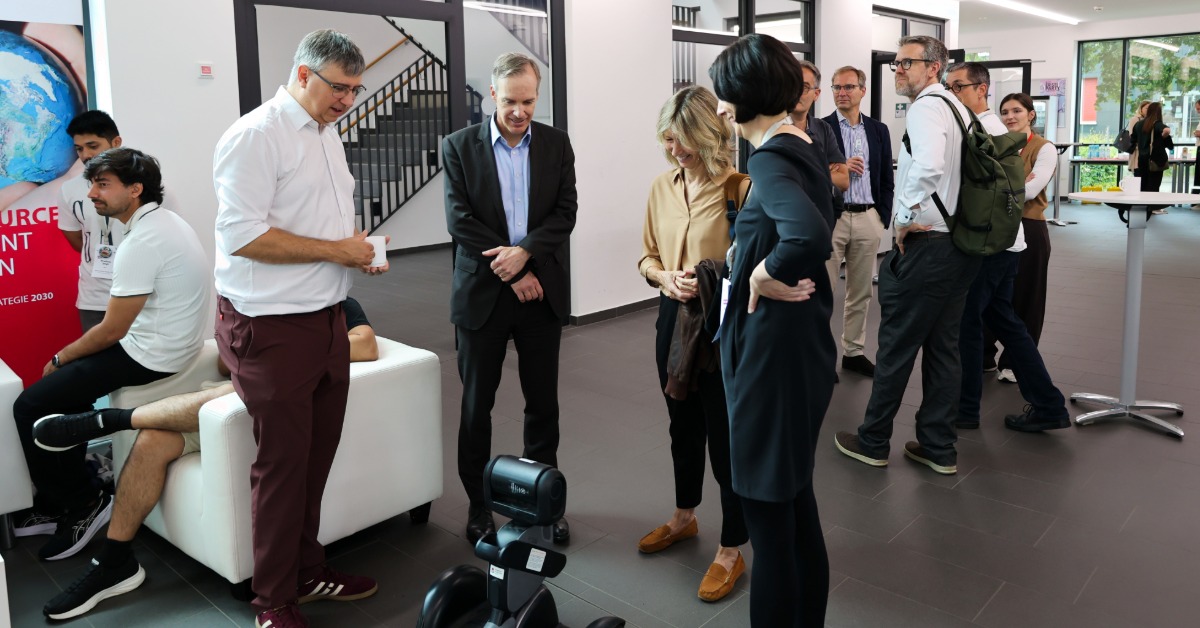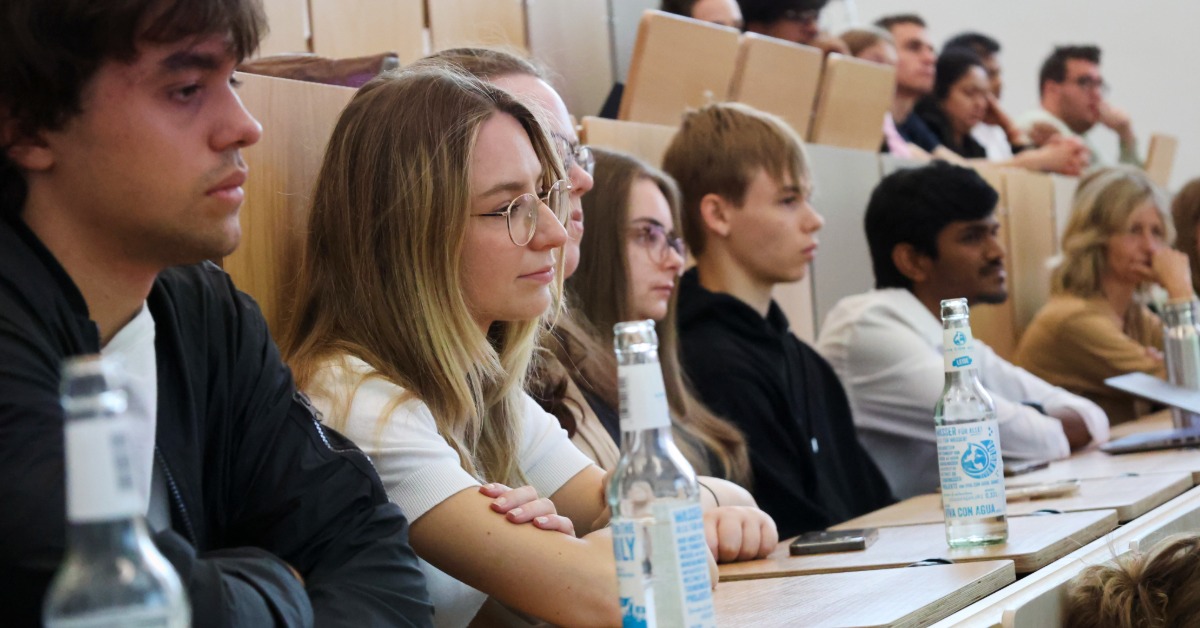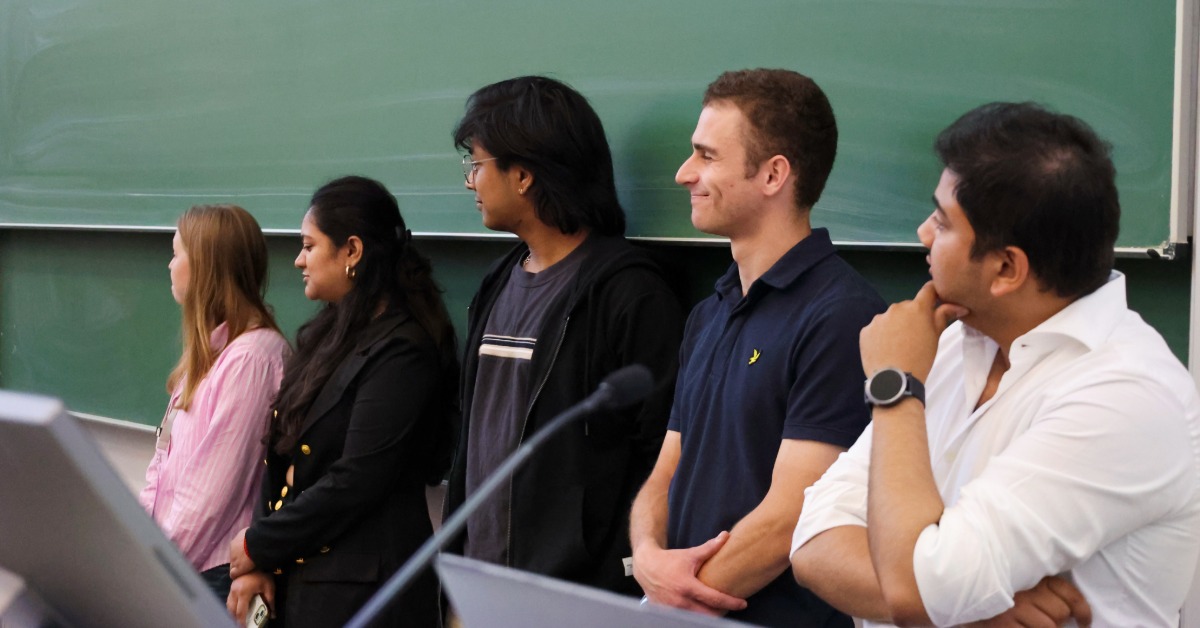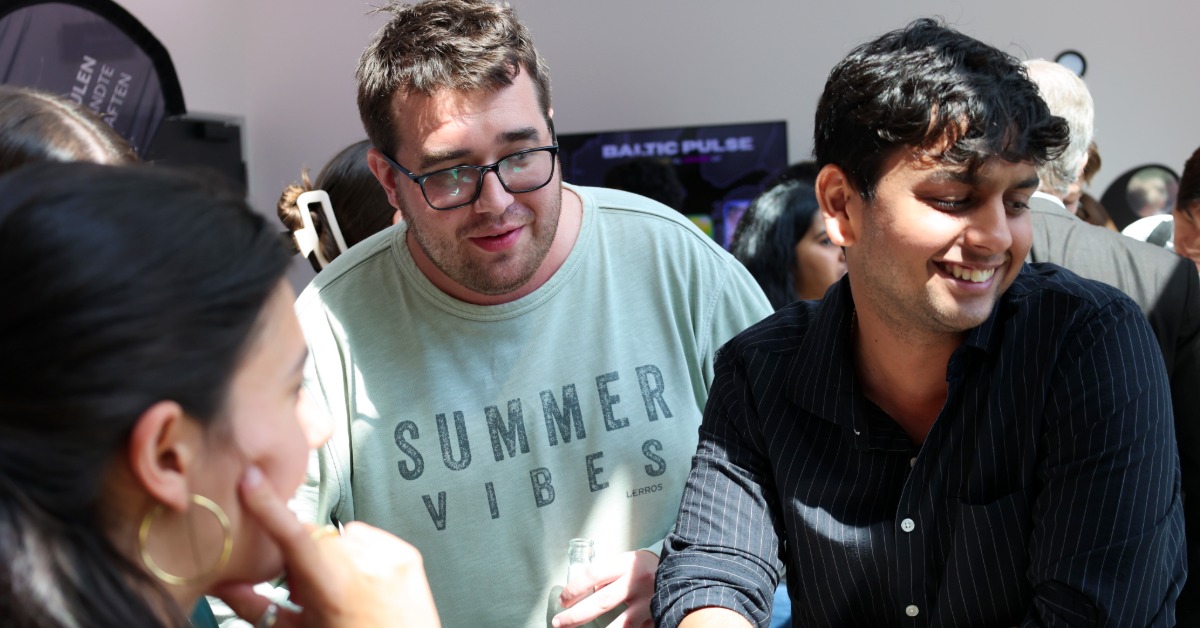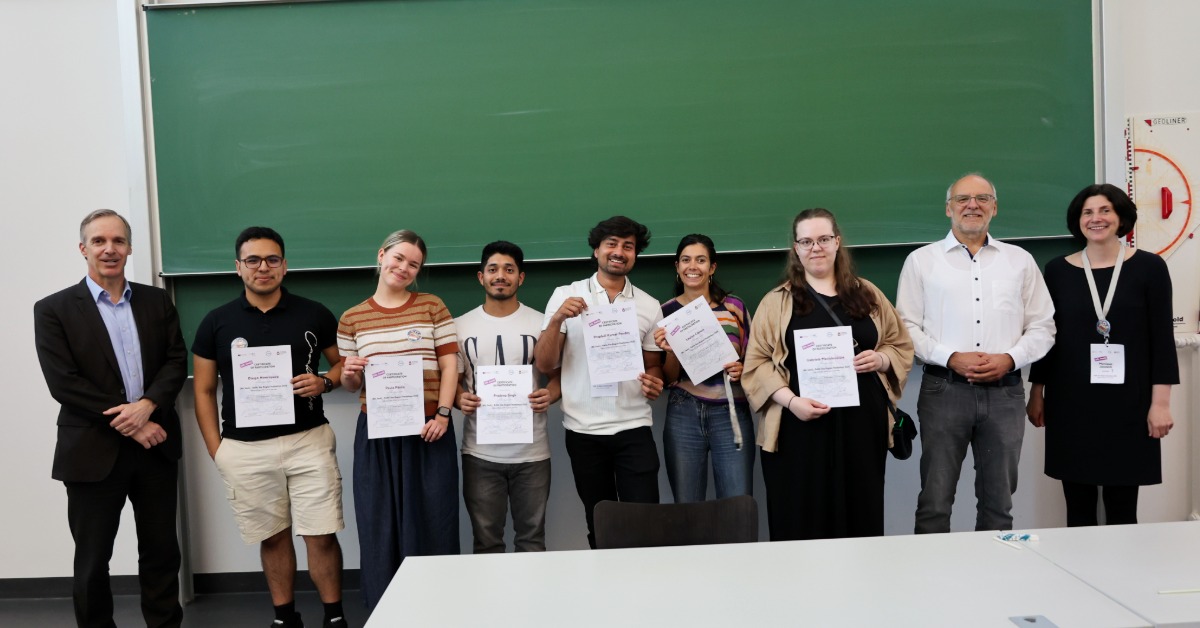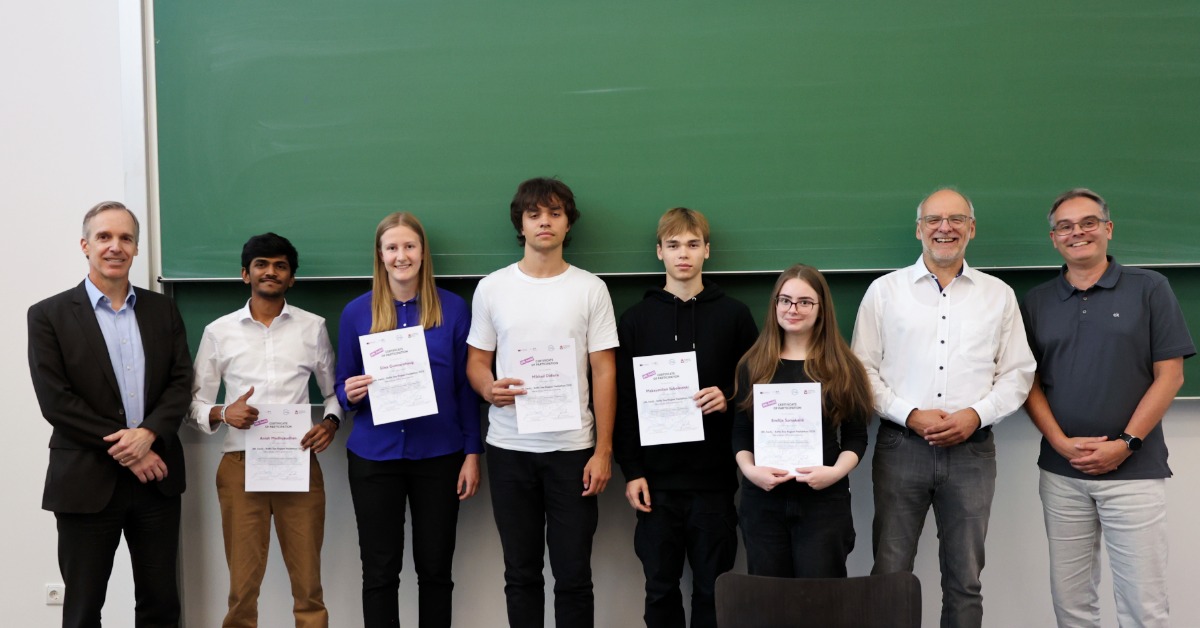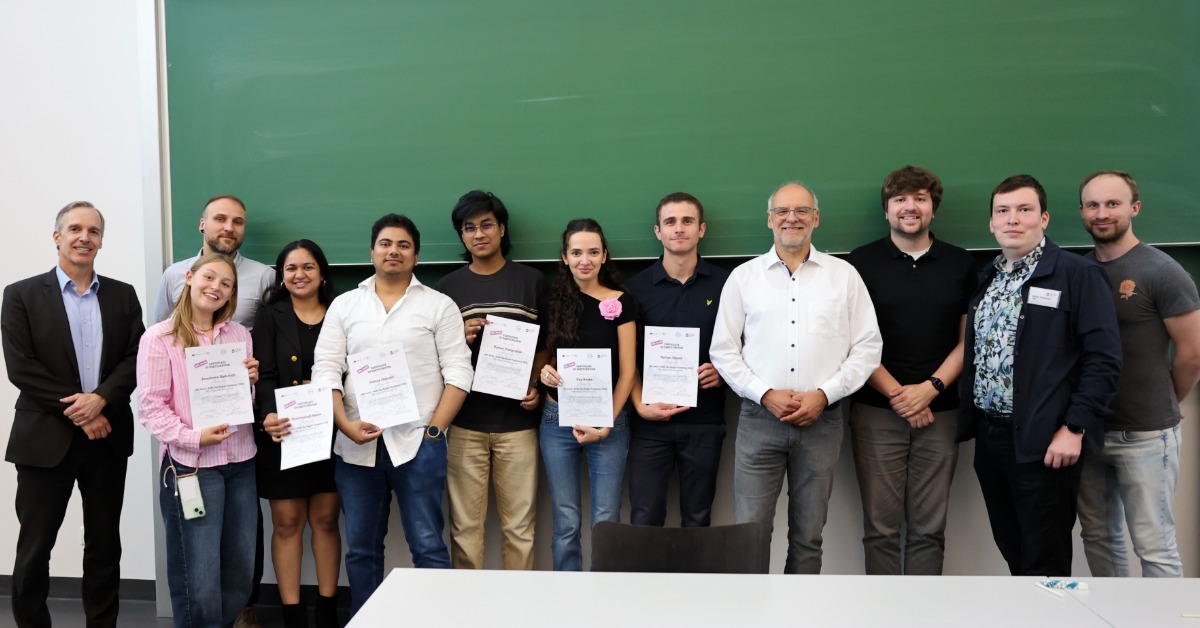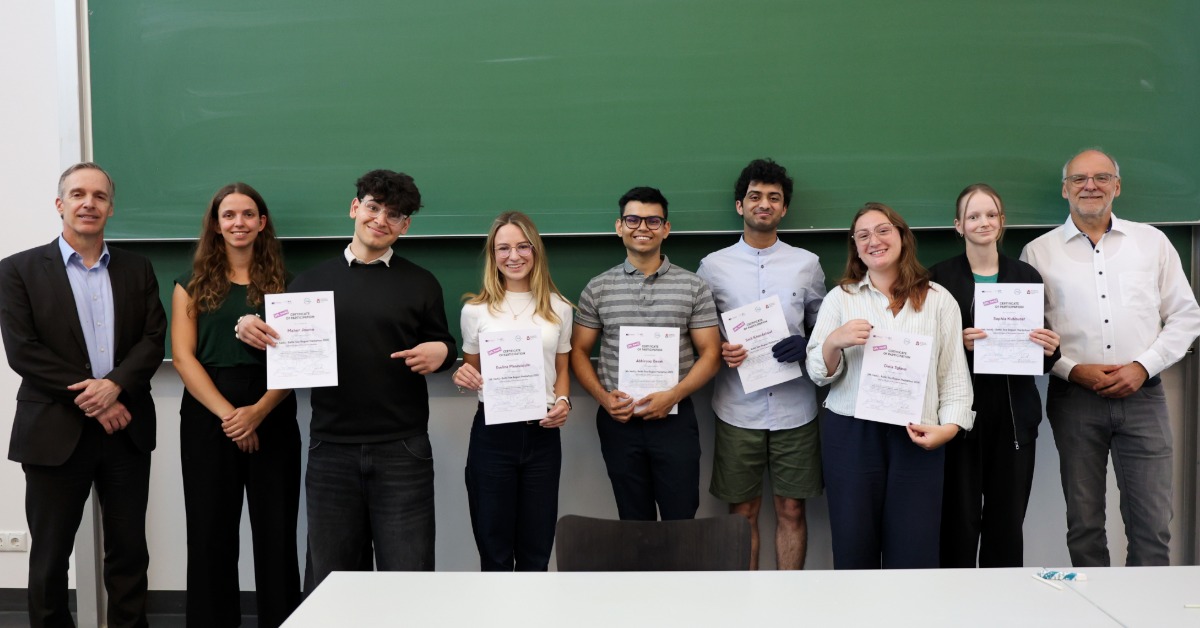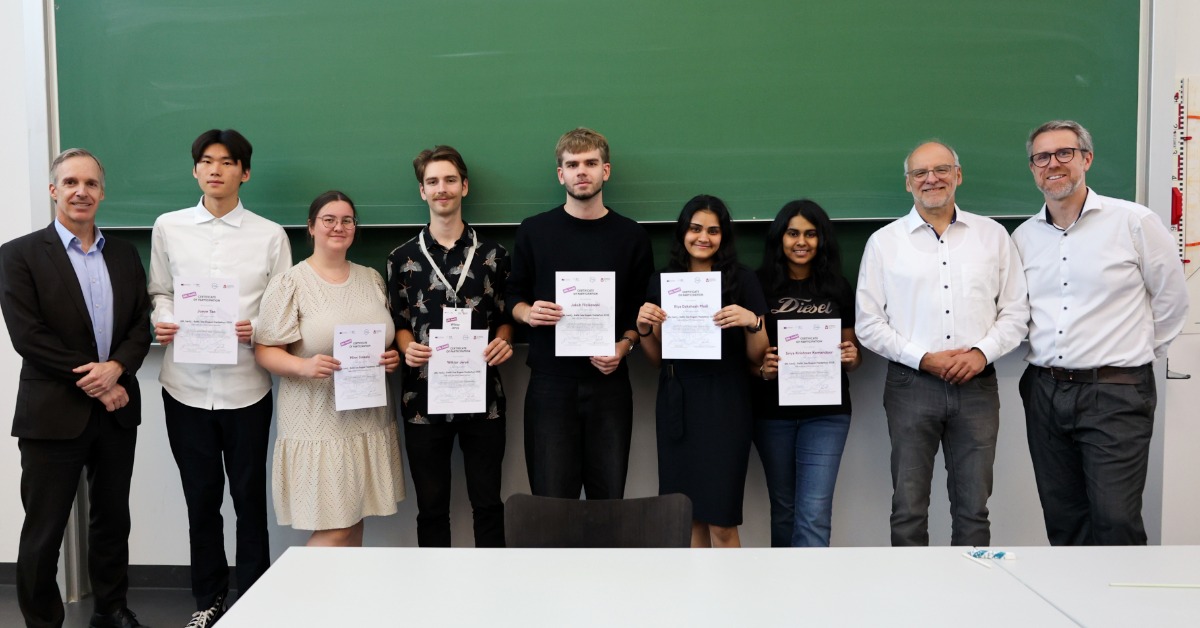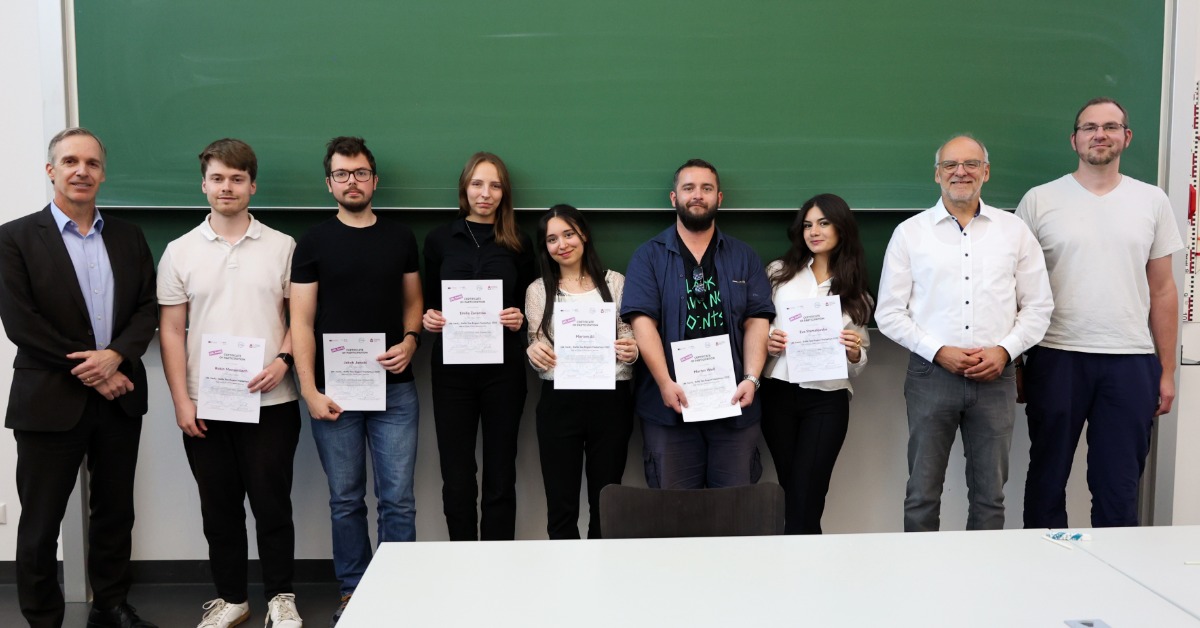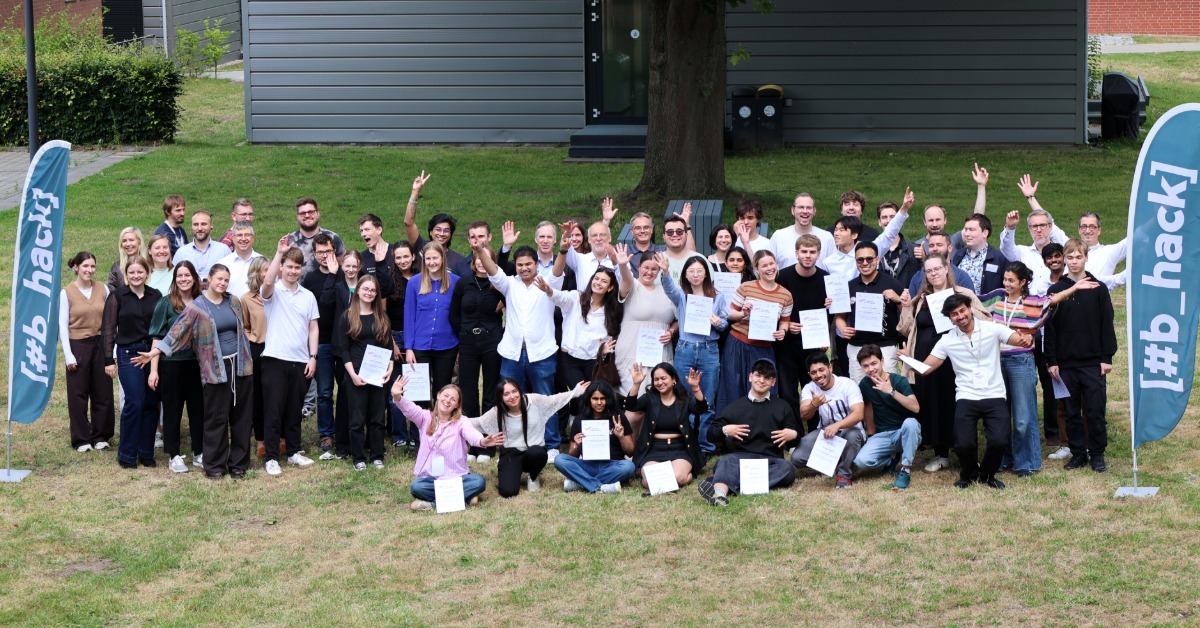
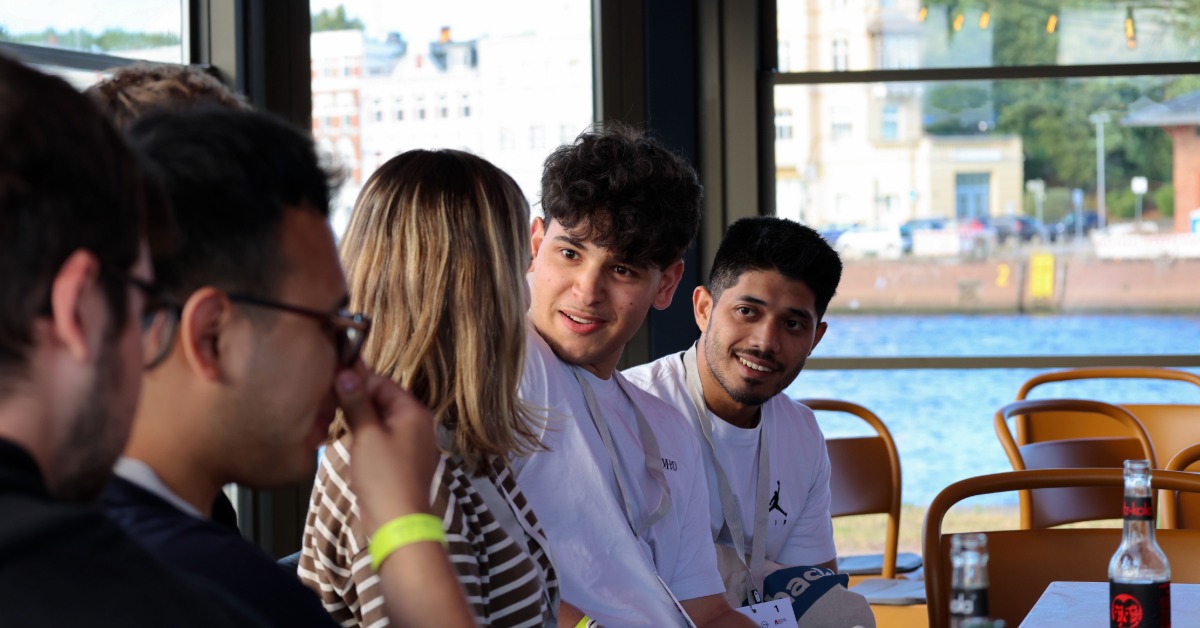
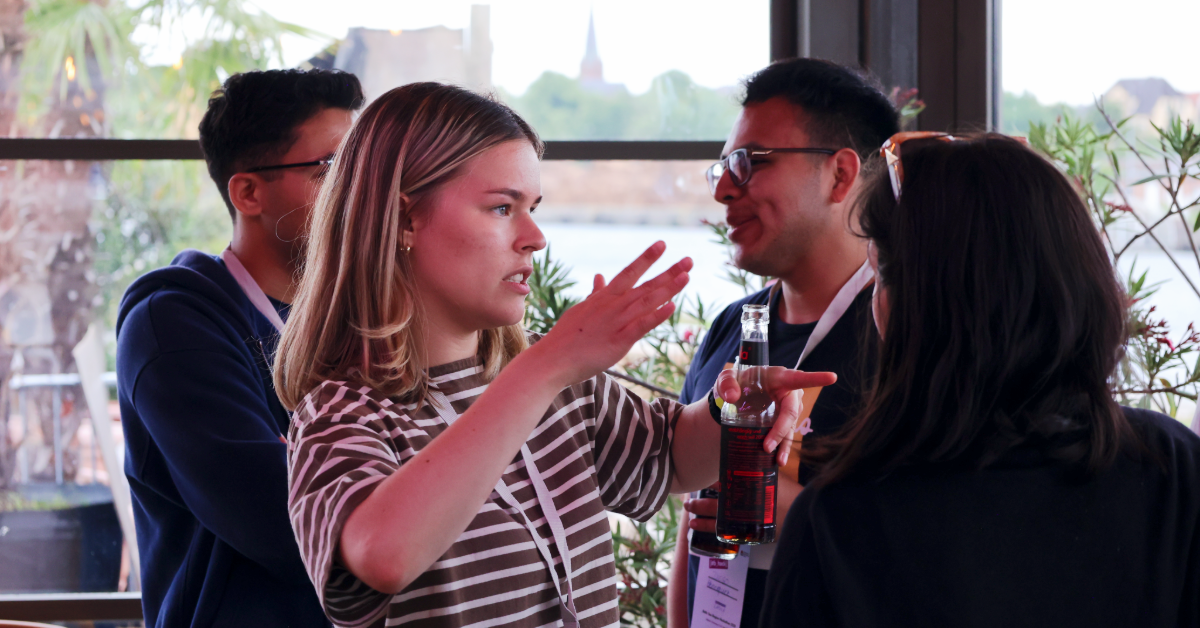
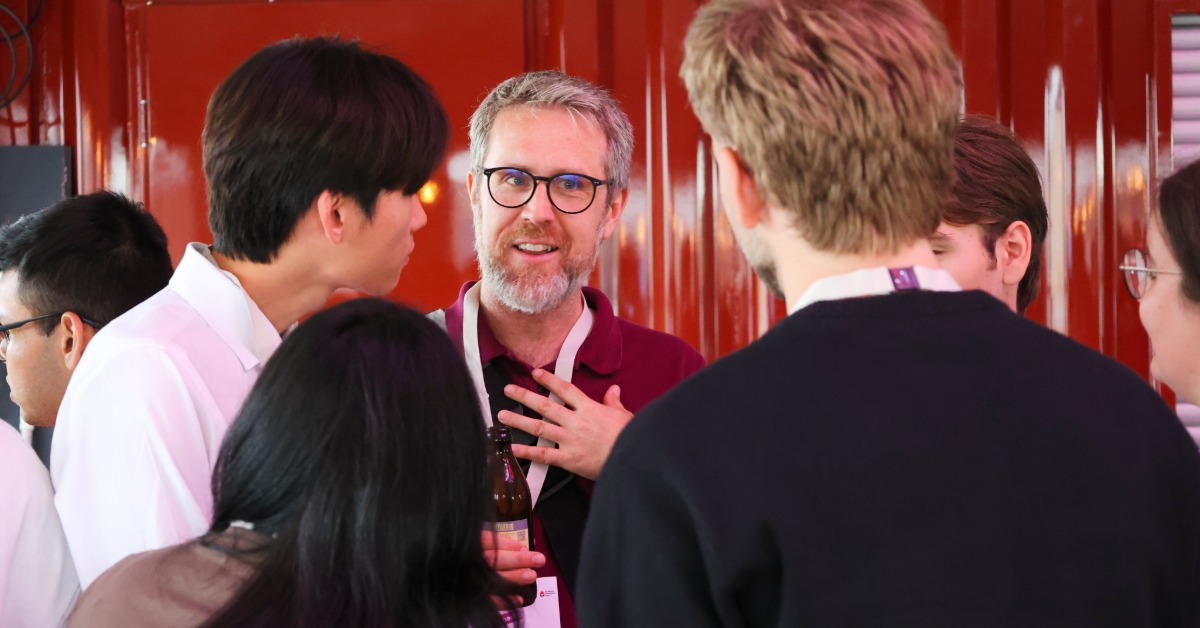
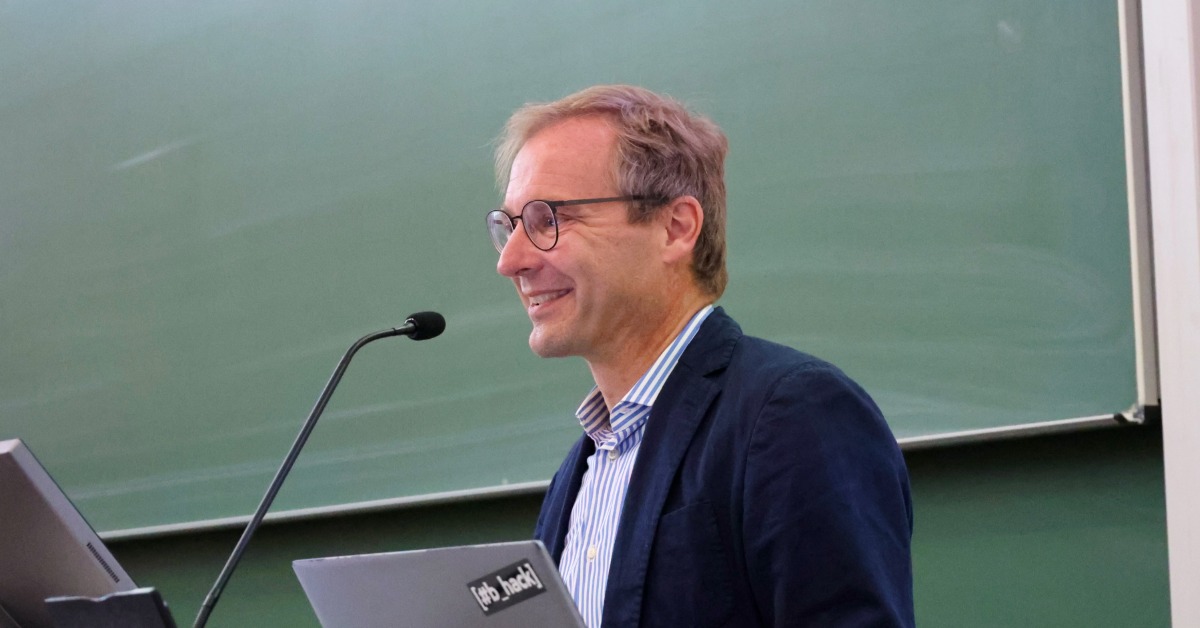
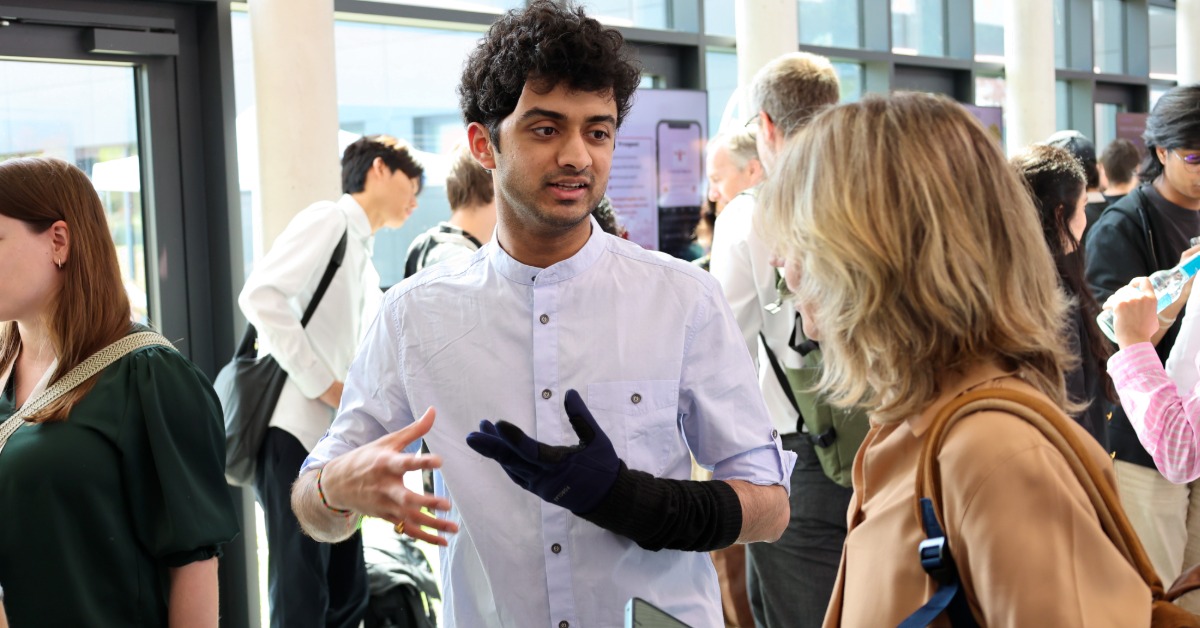
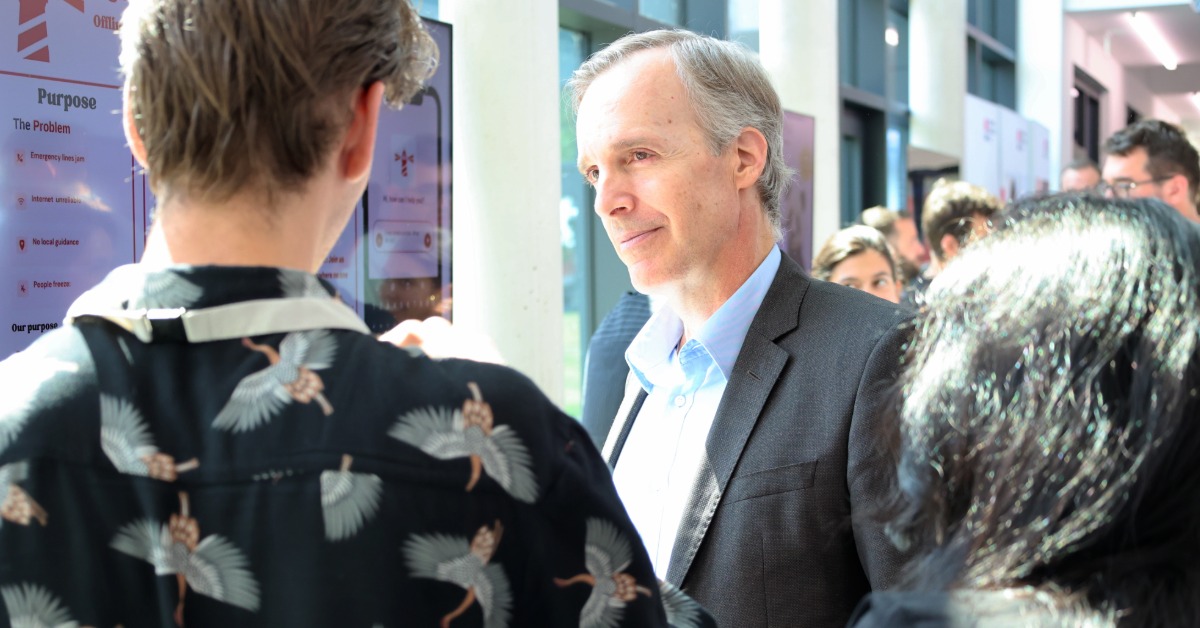
Kulturwissenschaftlerin, Informatikerin oder Programmierer: Am Donnerstag, dem 2. Juli 2026, trafen die insgesamt 44 Teilnehmenden des #b_hack aus dem gesamten Ostseeraum zum ersten Mal aufeinander. Ein Kennenlernabend mit Blick auf die Trave, kühlen Getränken und ofenfrischer Pizza.
Ich war im letzten Jahr auch schon dabei
, sagt Louise Coram aus Neuseeland, die sich aktuell in Schweden aufhält. Ich habe immer noch Kontakt zu meinem Team
, sagt sie. Es gäbe eine Chatgruppe, in der sich die Studierenden weiterhin austauschen – über die Ländergrenzen hinweg. Fünf von sechs aus dem Team des vergangenen Jahres sind auch 2026 wieder in Lübeck, nur aufgeteilt in unterschiedliche Gruppen. Warum noch einmal Teil des Hackathons sein? Um das Gehirn aktiv zu halten
, sagt die Studentin aus dem Bereich Environmental Politics.
Neu kennengelernt hat sie an diesem Abend Paula Pāvila aus Lettland, mit der sie sich in den kommenden Tagen mit dem Thema Fake News beschäftigen wird. Paula Pāvila ist zum ersten Mal dabei. Sie erfuhr über einen Kollegen, dass es diese Veranstaltung gibt. Die Studentin der Intercultural Relations kommt aus Riga und hat sich bereits im Vorfeld viel mit dem Thema Fake News und politischen Aktivismus beschäftigt. Wir sind nicht alle Programmierer, aber ich glaube, das kann das Spannende sein
, sagt sie.
Baltic Sea Region Hackathon: Ein Problem, mehrere Perspektiven
Und genau darum geht es beim Hackathon: ein Thema, ein Problem, mehrere Blickwinkel, ein Lösungsansatz. Die Teams aus bis zu sieben Studierenden wurden im Vorfeld so gemischt, dass möglichst viele Fachrichtungen zusammenkommen.
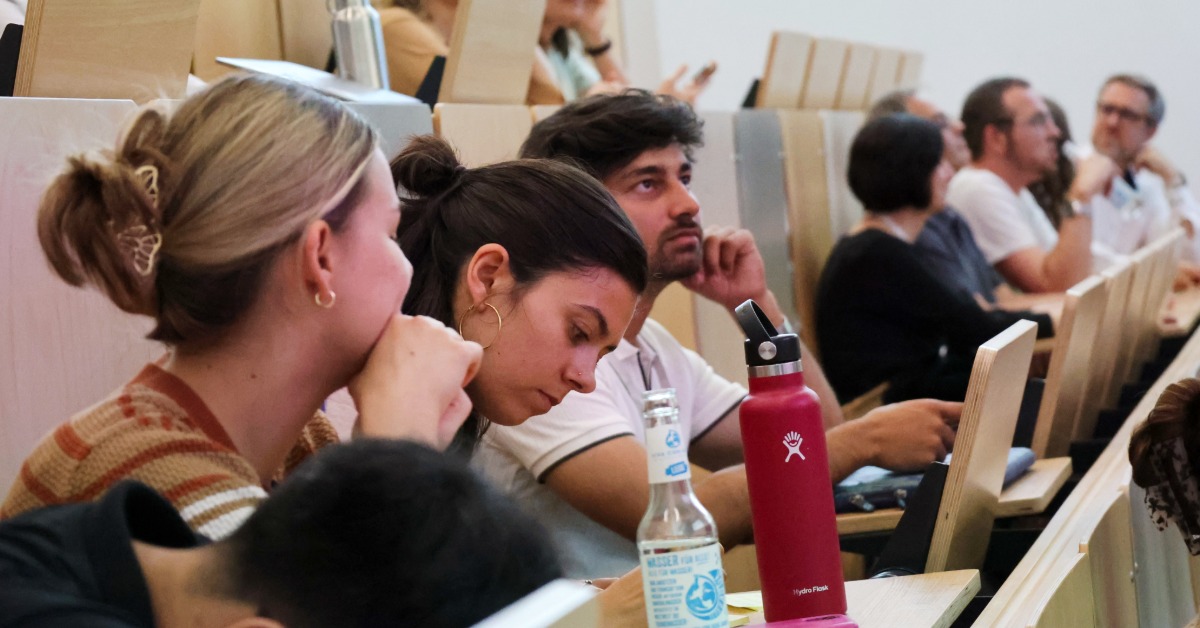
Am Freitag und Samstag hieß es dann: ran an die Arbeit. Die 44 Studierenden wurden auf insgesamt sieben Tracks verteilt, die sich jeweils mit einer anderen Fragestellung rund um das Thema Freie und sichere Gesellschaften – Zusammenarbeit in schwierigen Zeiten beschäftigten.
Studierende beschäftigen sich mit realen geopolitischen Problemen
In geopolitisch angespannten Zeiten braucht es mehr denn je Austauschformate, die unsere demokratischen Grundwerte unterstreichen und in denen insbesondere junge Menschen aus verschiedenen Nationen gemeinsam an innovativen Themen arbeiten
, sagt Guido Wendt, Staatssekretär im Ministerium für Allgemeine und Berufliche Bildung, Wissenschaft, Forschung und Kultur in Schleswig-Holstein. Der Baltic Sea Region Hackathon kombiniert dies in einer wunderbar kreativen und positiven Atmosphäre an der TH Lübeck und unterstreicht, wie wichtig uns die Förderung digitaler Innovationen und grenzüberschreitende Zusammenarbeit sind.
Technologie kann Fake News entlarven, Angriffe besser einordnen und Resilienz stärken. Genau dafür entwickeln junge Tech-Talente beim Baltic Sea Region Hackathon Lösungen – für eine Ostseeregion, die zusammenhält, frei bleibt und sicherer wird
, sagt Cornelia Schmachtenberg, Ministerin für Landwirtschaft, ländliche Räume, Europa und Verbraucherschutz.
Ein Thema: Freiheit und Sicherheit – auch bei Auslandsaufenthalten
Für die Studierenden Ruzimuhammad Babaev aus Lettland, Yudi Cheng aus Deutschland, Szymon Gorny aus Polen, Shivang Gupta aus Finnland, Bernd Ole Heinrich aus Deutschland, Karolina Vapper aus Estland und Jiayi Gong aus Deutschland ging es konkret mit den Themen Freiheit und Sicherheit in die Arbeitstage. Beide Themen sind höchst individuell, je nach Privatleben, Vorlieben und Erfahrungen. Was im eigenen Land erlaubt ist, kann in einem anderen mit hohen Strafen einhergehen. Freiheit und Sicherheit sind nicht übertragbar.
Die Studierenden der Gruppe sechs Liberty and Security Dashboard haben zum einen relevante Aspekte von Freiheit und Sicherheit für verschiedene Gruppen identifiziert und sich gleichzeitig mit der Möglichkeit einer Plattform auseinandergesetzt, die alle relevanten Informationen der unterschiedlichen Länder auf einen Blick bereithält und miteinander vergleichen kann.
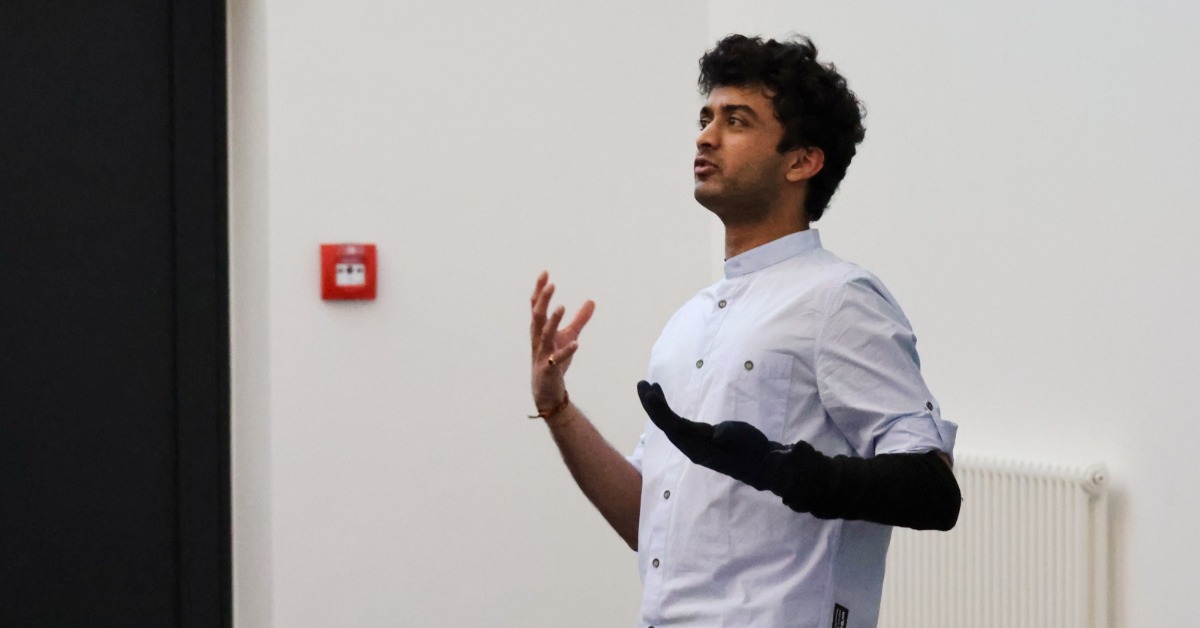
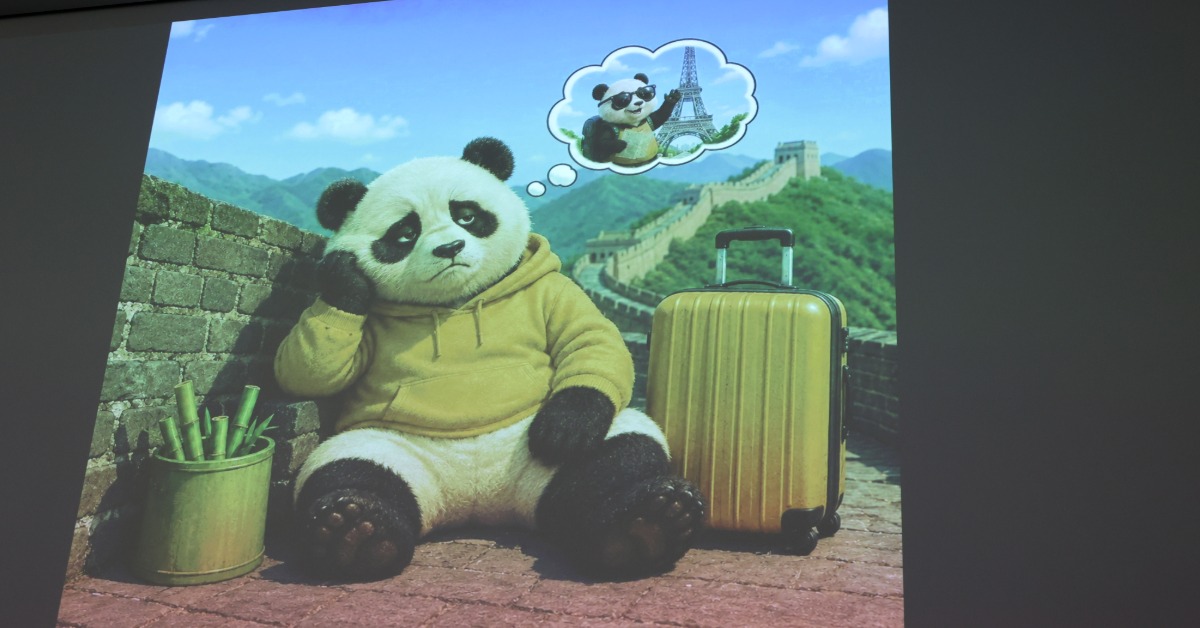
Während sie die Bilder ihre Präsentation – mit der sie einen Panda auf große Reise schickten – mit KI gestalteten, ist genau diese kein Teil der Plattform: Wir wollen Fake News und Halluzinationen vermeiden
, sagt einer der beiden Präsentatoren. Genau das ist auch der Grund, warum alle Quellen zu den Informationen der Plattform einsehbar sind. Freiheit und Sicherheit bedeuten eben auch sichere Informationsquellen.
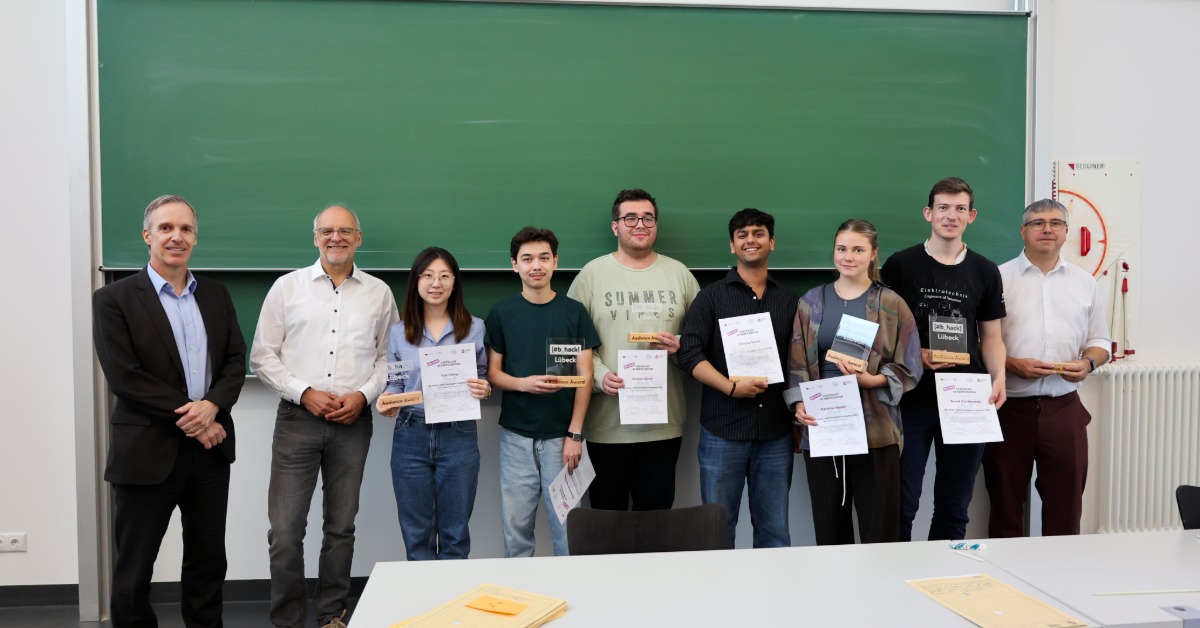
Platz eins beim Hackathon 2026: „Liberty an Security Dashboard“
Es ist beeindruckend, wie junge Menschen in so kurzer Zeit mit Problemen umgehen und Lösungen finden, die geopolitisch höchst relevant sind
, sagt Gustav Lindström, Generaldirektor des Ostseerates (CBSS).
Mit dem Liberty and Security Dashboard haben die Studierenden die Idee einer Plattform geschaffen, die Informationen über Sicherheit und Freiheit miteinander vergleichen kann und dafür sorgt, dass Studierende bei ihren Überlegungen eine datenbasierte Grundlage haben könnten und Entscheidungen nicht rein aus dem Gefühl heraus getroffen werden. Mit dieser Idee sicherten sie sich am Ende des Hackathons den ersten Platz.
Hackathon: Es geht um mehr als nur einen Gewinn
Es wird allerdings schnell klar, dass ein Sieg nicht das Wichtigste der vergangenen Tage war. Ich bin sehr inspiriert
, sagt Paula Pāvila. Ich hatte die Chance, etwas kennenzulernen, das außerhalb meines eigenen Feldes liegt.
Und ein paar kleinere Programmiertricks seien ebenfalls hängengeblieben für alltägliche Dinge
.
Ich bin noch einmal sehr gewachsen
, sagt Louise Coram. Zusammen mit Paula Pāvila hat sie die Präsentation zum Thema Fake News gehalten. Eigentlich mag ich das gar nicht
, sagt sie mit einem Lächeln. Aber sie sei so überzeugt von ihren Ergebnissen, dass sie die Aufgabe gerne auf sich nahm. Sie entwickelten eine Plattform, die auf einen Blick Fakten über politische Versprechen und Parteien liefert und aufzeigen kann, wo die Informationen eigentlich herkommen.
Aber es ist nicht nur der Austausch von Wissen, der seine Spuren hinterlässt, sondern vor allem das Miteinander. Am Anfang waren wir Fremde
, sagt Louise Coram über sich und ihre Zimmerpartnerin. Jetzt sind wir Freunde.
Über den Baltic Sea Region Hackathon
Bereits zum vierten Mal wurde die Technische Hochschule Lübeck zum Treffpunkt für junge Menschen aus dem gesamten Ostseeraum. Beim Baltic Sea Region Hackathon 2026 arbeiteten 44 internationale Teilnehmende drei Tage lang intensiv an digitalen Lösungen für reale gesellschaftliche Herausforderungen. Vom 2. bis 5. Juli entwickelten sie in sieben thematischen Tracks kreative und innovative Lösungen für eine sichere und freie Gesellschaft.
Organisiert und finanziert wird der Hackathon vom Land Schleswig-Holstein in Zusammenarbeit mit dem Ostseestaatenrat (CBSS) und der Technischen Hochschule Lübeck (TH Lübeck).
English Version:
How can free and secure societies thrive in a world shaped by crises and uncertainty? This question is not only being asked by policymakers around the world but also by the students who gathered in Lübeck from 2 to 5 July 2026 for this year's Baltic Sea Region Hackathon. The event focused on developing creative solutions to real-world challenges while fostering exchange, collaboration, and even a few new friendships.
Whether studying cultural sciences, computer science, or software engineering, all 44 participants in this year's #b_hack from across the Baltic Sea region met for the first time on Thursday, 2 July 2026. The event began with a welcome evening with a view of the River Trave, accompanied by cold drinks and freshly baked pizza.
I also took part last year
, says Louise Coram from New Zealand, who is currently studying in Sweden. I'm still in touch with my team
she explains. The students stayed in touch in a group chat long after the eventended, crossing national borders with ease. Five of the six members of last year's team returned to Lübeck in 2026, although this time they were assigned to different groups. Why participate again? To keep my brain active
says the student of environmental politics.
That evening she met Paula Pāvila from Latvia. Together, they spent the following days working on the issue of fake news. For Paula, this was her first Baltic Sea Region Hackathon. She heard about the event from a colleague. The student of intercultural relations from Riga had already explored issues surrounding fake news and political activism before arriving in Lübeck. Not all of us are programmers, but I think that's exactly what makes it exciting
,she says.
Baltic Sea Region Hackathon: One Challenge, Multiple Perspectives
That is precisely the idea behind the hackathon: one challenge, many perspectives, and one innovative solution. Teams of up to seven students were carefully assembled in advance to bring together as many different academic disciplines as possible.
Friday and Saturday were dedicated entirely to developing ideas. The 44 participants were divided into seven thematic tracks, each addressing a different question under the overarching theme Free and Secure Societies – Working Together in Challenging Times.
Students Tackle Real Geopolitical Challenges
In times of geopolitical tension, we need opportunities for dialogue more than ever –formats that reinforce our democratic values and enable young people from different nations to work together on innovative ideas
,says Guido Wendt, State Secretary at the Ministry of General and Vocational Education, Science, Research and Culture of Schleswig-Holstein. The Baltic Sea Region Hackathon combines all of this in a wonderfully creative and positive atmosphere at TH Lübeck, demonstrating just how important digital innovation an cross-border cooperation are.
Technology can expose fake news, improve the detection of cyber threats, and strengthen resilience. That is exactly what young tech talents are developing at the Baltic Sea Region Hackathon – solutions for a Baltic Sea region that remains united, free, and secure
, says Cornelia Schmachtenberg, Minister for Agriculture, Rural Areas, Europe and Consumer Protection.
Freedom and Security – Also When Studying Abroad
For the team consisting of Ruzimuhammad Babaev (Latvia), Yudi Cheng (Germany), Szymon Gorny (Poland), Shivang Gupta (Finland), Bernd Ole Heinrich (Germany), Karolina Vapper (Estonia), and Jiayi Gong (Germany), the focus was on the concepts of freedom and security. These ideas are highly individual, shaped by personal experiences, lifestyles, and national regulations. What is perfectly acceptable in one country may carry severe legal consequences in another. Freedom and security are not universal – they depend on context.
The students in Track Six, Liberty and Security Dashboard, identified key aspects of freedom and security relevant to different groups. At the same time, they developed the concept of a digital platform that would provide comparable information about different countries at a glance, helping users make informed decisions before travelling, studying abroad, or relocating.
Although the presentation itself featured AI-generated illustrations – including a panda travelling across different countries – artificial intelligence is deliberately not part of the proposed platform. We ant to avoid fake news and AI hallucinations
, one of the presenters explained. For that reason, every piece of information on the platform would be fully traceable to its original source. Reliable information, after all, is an essential part of both freedom and security.
First Place at the 2026 Hackathon: Liberty and Security Dashboard
It is impressive to see how quickly young people analyse complex problems and develop solutions that address highly relevant geopolitical challenges
, says Gustav Lindström, Director General of the Council of the Baltic Sea States (CBSS).
With the Liberty and Security Dashboard, the team designed a platform that compares information related to freedom and security across countries. The concept would provide students with a reliable, data-driven foundation for making important decisions instead of relying solely on intuition. This idea ultimately earned the team first place at the Baltic Sea Region Hackathon 2026.
More Than Just Winning
It quickly became clear that winning was not the most important outcome of the past few days.I feel incredibly inspired
, says Paula Pāvila. I had the opportunity to learn about something completely outside my own field
. Along the way, she also picked up a few useful programming skills that she expects to apply in everyday life.
I've grown a lot
, says Louise Coram. Together with Paula Pāvila, she presented her team's project on combating fake news. Public speaking isn't usually my favourite thing
, she says with a smile. But I believed so strongly in what we had achieved that I was happy to do it
. Their team developed a platform that provides clear, transparent information about political parties and campaign promises while clearly showing where the underlying information comes from.
Yet beyond the exchange of knowledge, it was the personal connections that left the deepest impression. At the beginning, we were strangers
, Louise says about her roommate during the event. Now we're friends
.
About the Baltic Sea Region Hackathon
For the fourth time, Technische Hochschule Lübeck (TH Lübeck) became a meeting place for young people from across the Baltic Sea region. During the Baltic Sea Region Hackathon 2026, 44 international participants spent three intensive days developing digital solutions to real societal challenges. From 2 to 5 July, they worked in seven thematic tracks to create innovative ideas for a free, secure, and resilient society.
The Baltic Sea Region Hackathon is organized and funded by the State of Schleswig-Holstein in cooperation with the Council of the Baltic Sea States (CBSS) and Technische Hochschule Lübeck.