
HI Lübeck
Hansebelt Innovation Matrix Lübeck
| Duration: | 01.07.2023 - 31.12.2027 |
| Project Leader: | Prof. Dr.-Ing. Horst Hellbrück |
| Staff: | Sven Ole Schmidt M.Sc. former staff: Swen Leugner, M.Sc.; Orsolya Pragay-Szabo, Dipl.-Öko. |
Background

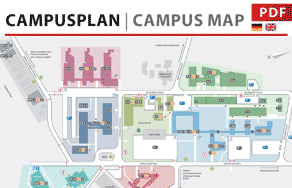
The Hanse Innovation Campus (HIC) Lübeck is an existing network of science, research and technology transfer institutions, supported by the University of Lübeck (UzL) and the Lübeck University of Applied Sciences (THL). It is characterized by close cooperation between different institutions such as universities, research centers, the Technology Centre (TZL) and the University Hospital (UKSH). In a cross-campus realignment process, it is set to become the central innovation driver for the entire Hansebelt region.
Energy, digitalization and sustainable urban development are among the key transformation challenges in our region. Companies, municipalities and public institutions are facing similar questions: How can energy consumption be made visible? What role can sensor technology, data platforms and artificial intelligence play? How can buildings, districts, production sites or public infrastructures be operated in a smarter and more efficient way?
Within the Energy & Smart City focus area of the Hansebelt Innovation Matrix Lübeck, we connect the technical expertise of the Hanse Innovation Campus with concrete needs from the region. We work at the interface of science, business, public administration and society.
Our approach is clear: We do not aim to develop abstract visions of the future. Instead, we focus on realistic, applicable and understandable solutions. The starting point is always a concrete question, existing data, available infrastructure and feasible next steps.
Goal
The goal of the focus area is to support regional partners in developing and implementing digital and sustainable solutions.
We help assess technical possibilities, identify suitable use cases and take the first steps toward implementation. To this end, we combine expertise in energy, sensor technology, IoT, data analysis, artificial intelligence, smart city applications and digital infrastructures.
The focus area serves as a point of contact for anyone who wants to address energy and smart city topics in a practical way: companies, municipalities, public administrations, universities, networks and other regional stakeholders.
Together, we develop ideas, assess feasibility, build demonstrators and create transfer formats in which knowledge is not only shared, but directly applied.
Transfer
We support regional partners in turning an initial idea into a tangible project. This may begin with an open question:
- How can energy consumption be measured?
- Which sensors are suitable for our use case?
- How can data be visualized in a meaningful way?
- Where can artificial intelligence provide practical support?
- Which smart city application is realistic for our municipality or company?
As part of our transfer activities, we jointly clarify needs, objectives and possible next steps. This can lead to feasibility studies, demonstrators, project ideas, funding proposals or concrete implementation projects.
Typical topics include:
- energy monitoring and energy efficiency
- sensor technology and IoT infrastructures
- LoRaWAN and wireless sensor networks
- data analysis and visualization
- digital twins
- smart city applications
- smart business parks
- municipal digitalization
- building and district monitoring
- AI-supported applications in the energy and infrastructure sector
Our understanding of transfer is practical: Together, we want to find out what is technically sound, organizationally feasible and genuinely useful for the specific application.
Best Practices and Demonstrators
Many technologies only become clear when they can be seen, touched and tested. That is why we work with demonstrators, prototypes and illustrative examples.
We show how measurement values become useful information. For example, from a sensor via a wireless connection into a dashboard. Or from energy data to a concrete basis for decision-making.
Possible best-practice examples and demonstrators include:
- mobile sensor and IoT demonstrators
- energy monitoring with live data
- LoRaWAN applications for buildings, sites or urban areas
- dashboards for visualizing measurement data
- demonstrators for Bluetooth and ultra-wideband localization
- examples of digital twins
- sensor technology for environmental, energy and infrastructure monitoring
- prototypical smart city applications
These examples are not just for presentation. They serve as starting points for discussions, workshops and joint project development.
Workshops
Our workshops are aimed at people who do not only want digital technologies explained to them, but want to understand and apply them in practice.
The formats can be adapted to the respective target group: companies, municipalities, public administrations, students, networks or mixed groups.
Possible workshop formats include:
- Energy Sprint
From an initial energy-related question to concrete ideas for measurement and action. - From Data to Deeds
How existing or newly collected data can lead to concrete decisions. - AI Without Coding
An introduction to AI applications without programming barriers, focused on practical use cases. - Data Managements
Fundamentals, benefits and first steps for buildings, districts, energy systems or infrastructure topics. - VibeCoding
Practical Workshop for collecting experience with practical Low-Code and No-Code Tools. - From Idea to Prototyping
Development of the first own prototype - right from a given challenge - Digital Self-Defense
Fundamentals of IT security, data awareness and safe digital work.
The workshops are designed to be accessible, but not superficial. The goal is for participants to leave with a better understanding, concrete ideas and realistic next steps.
Talks
For events, network meetings, specialist formats or internal impulses, we offer talks on energy and smart city topics.
Possible topics include:
- Smart City: What is useful, and what is just a buzzword?
- Energy monitoring as an entry point into energy efficiency
- LoRaWAN and IoT for municipalities and companies
- Sensors, data and dashboards: from measurement value to decision
- Digital twins for buildings, districts and infrastructure
- AI in energy and smart city applications
- Data-driven sustainability
- Wireless technologies for localization, monitoring and connected systems
- Transfer between university, business and municipalities: How does research reach application?
The talks can be used as short impulses, technical introductions or as preparation for more in-depth workshops and project discussions.
Contact
Do you have an idea, a concrete question or would you simply like to find out what possibilities exist for your company, municipality or institution?
Please feel free to contact us.
Prof. Dr. Horst Hellbrück
Email: horst.hellbrueck(at)th-luebeck.de
Sven Ole Schmidt
Email: sven.ole.schmidt(at)th-luebeck.de
Together, we will look at your question, identify suitable expertise and define a meaningful next step.
Project partner
|
| Founded by (ID: 03IHS245E)
|